
Australia’s Latest Startup Airline Zinc Sets Sights on Western Sydney
Australia’s airline industry could be getting another competitor very soon, with plans emerging for a new ultra low cost carrier, Zinc, which aims to establish itself at Western Sydney International Airport (WSI).
If launched, the carrier plans to initially target major domestic routes linking Sydney, Melbourne and Brisbane before gradually expanding to other destinations across Australia.
WSI could also provide an important advantage for the airline. Unlike Sydney Kingsford Smith Airport, the new airport will operate without overnight curfews, allowing carriers to maximise aircraft utilisation and schedule flights more freely. Lower congestion and the opportunity for expansion could also make WSI attractive for airlines seeking alternatives to increasingly constrained airports.
The timing of the proposal comes as interest in WSI continues to build ahead of its opening. Several airlines have already announced services to the airport, with both domestic and international operators recognising its potential as a second major aviation gateway for Sydney.
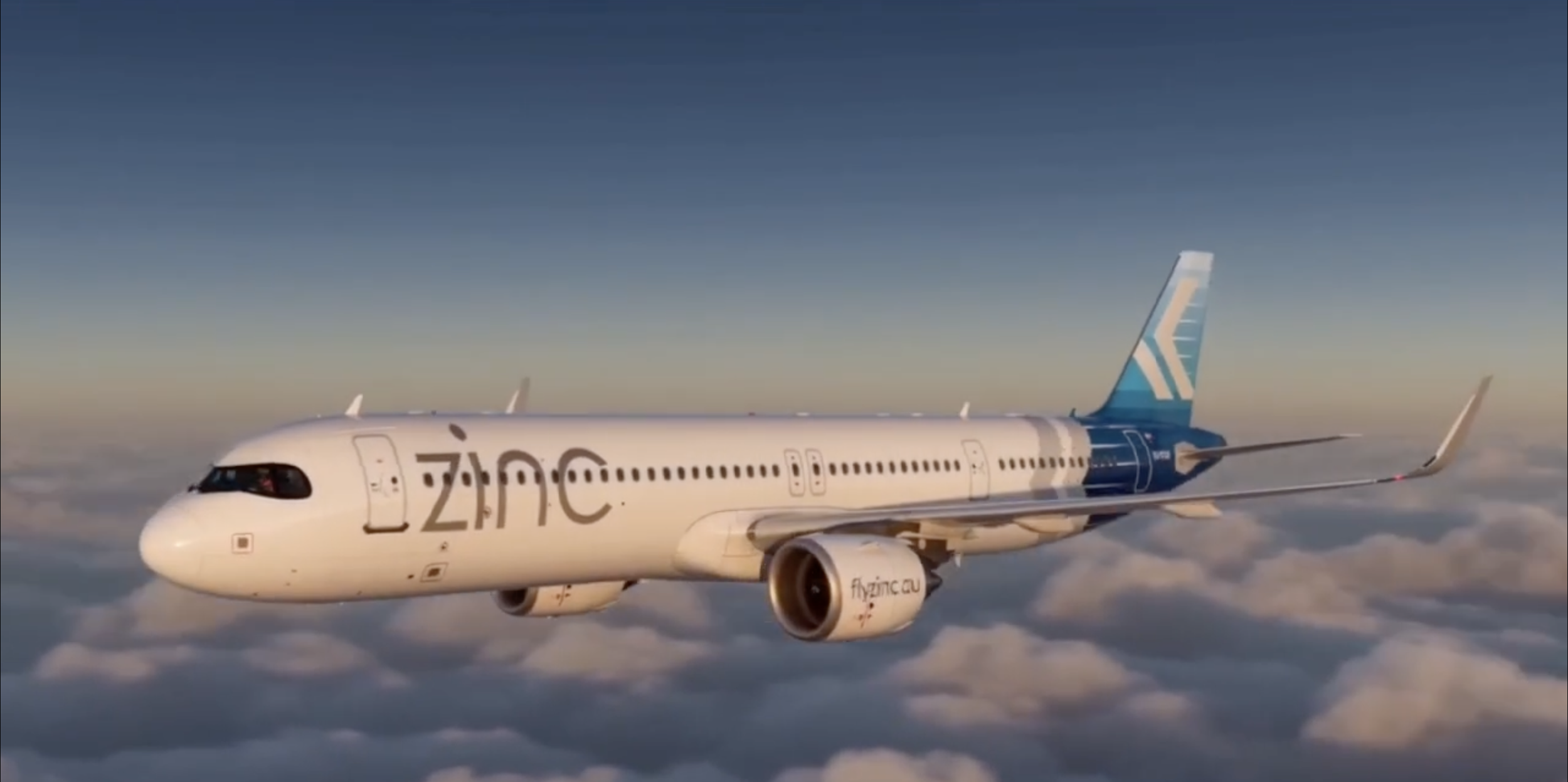
A mockup of Zinc’s proposed Airbus A321NEO livery | Zinc
The proposed airline is being developed by aviation industry veteran Peter Kelly, whose previous experience includes senior positions with both Qantas and Ansett as well as involvement in Jetstar’s development. Zinc’s strategy appears heavily influenced by successful European low-cost operators, particularly Ryanair, with an emphasis on low base fares supported by optional add-on services.
The model centres on keeping operating costs low while generating additional revenue through services such as baggage, seat selection and onboard purchases.
Fleet commonality is expected to play a major role in achieving those cost reductions. Zinc intends to operate an all-Airbus A321neo fleet, taking advantage of the aircraft’s higher passenger capacity and improved fuel efficiency. Using a single aircraft type also simplifies crew training and maintenance requirements while increasing operational flexibility.
However, Australia has historically been a difficult market for new airlines. Previous startup ventures have often struggled against strong competition, high operating costs and the realities of serving a geographically large domestic network. While lower fares are likely to appeal to travellers, turning an ambitious proposal into a sustainable airline remains a challenge.
Reports indicate Zinc is seeking approximately A$200 million in funding, with ambitions to begin operations roughly 17 months after securing investment.
For now, the airline remains a proposal rather than a confirmed entrant. Even so, Zinc adds another interesting development to the growing story surrounding Western Sydney International and the future shape of Australia’s aviation market.